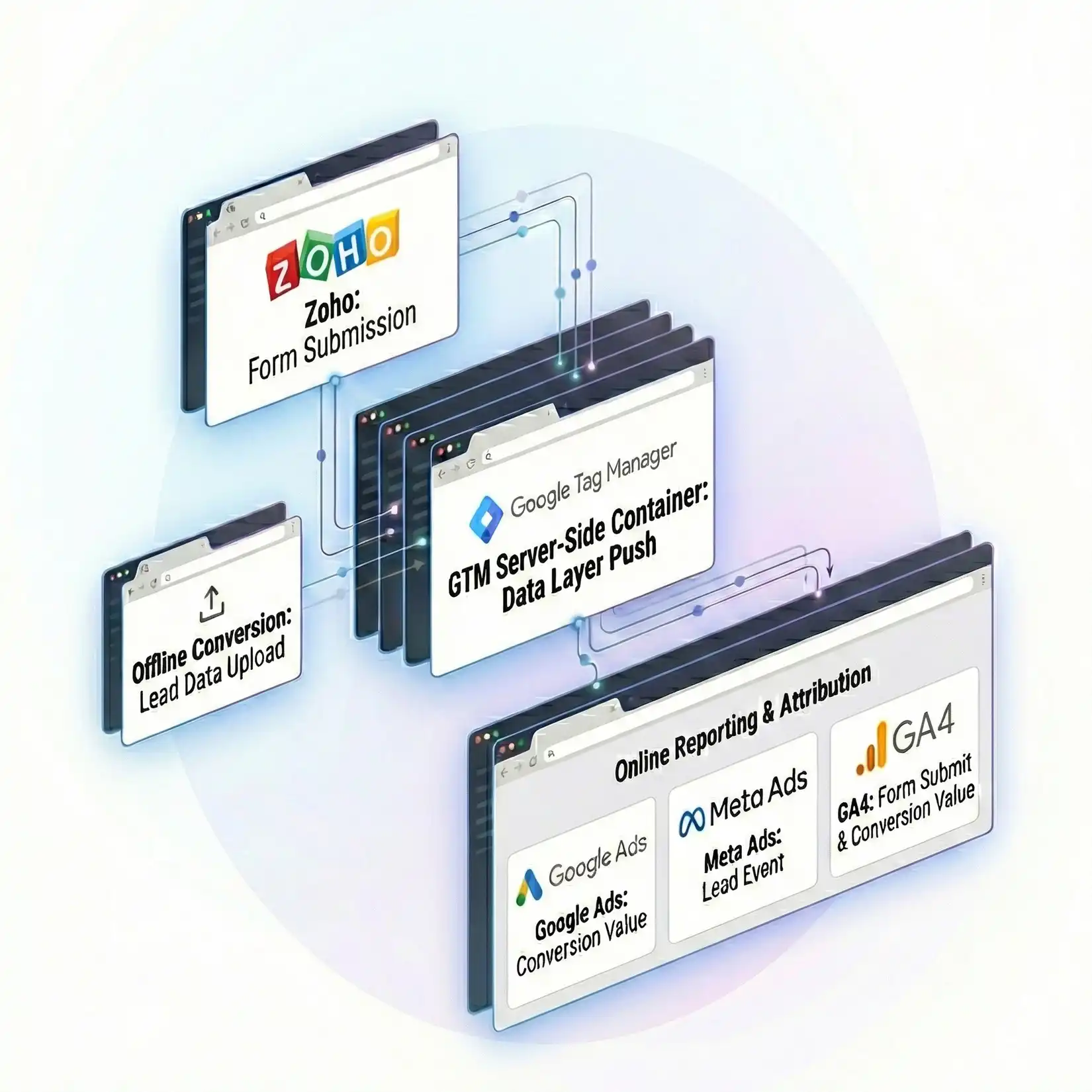
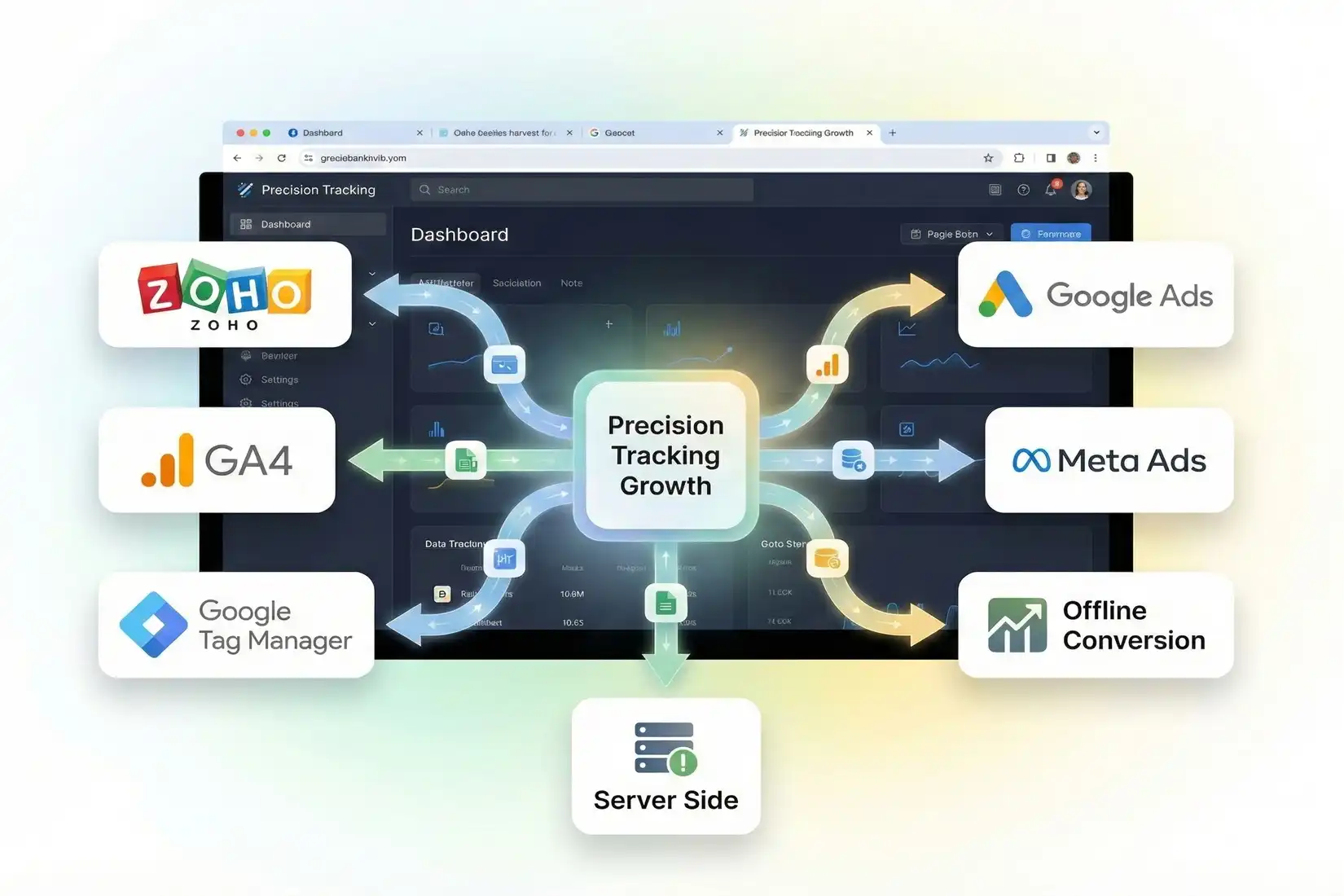
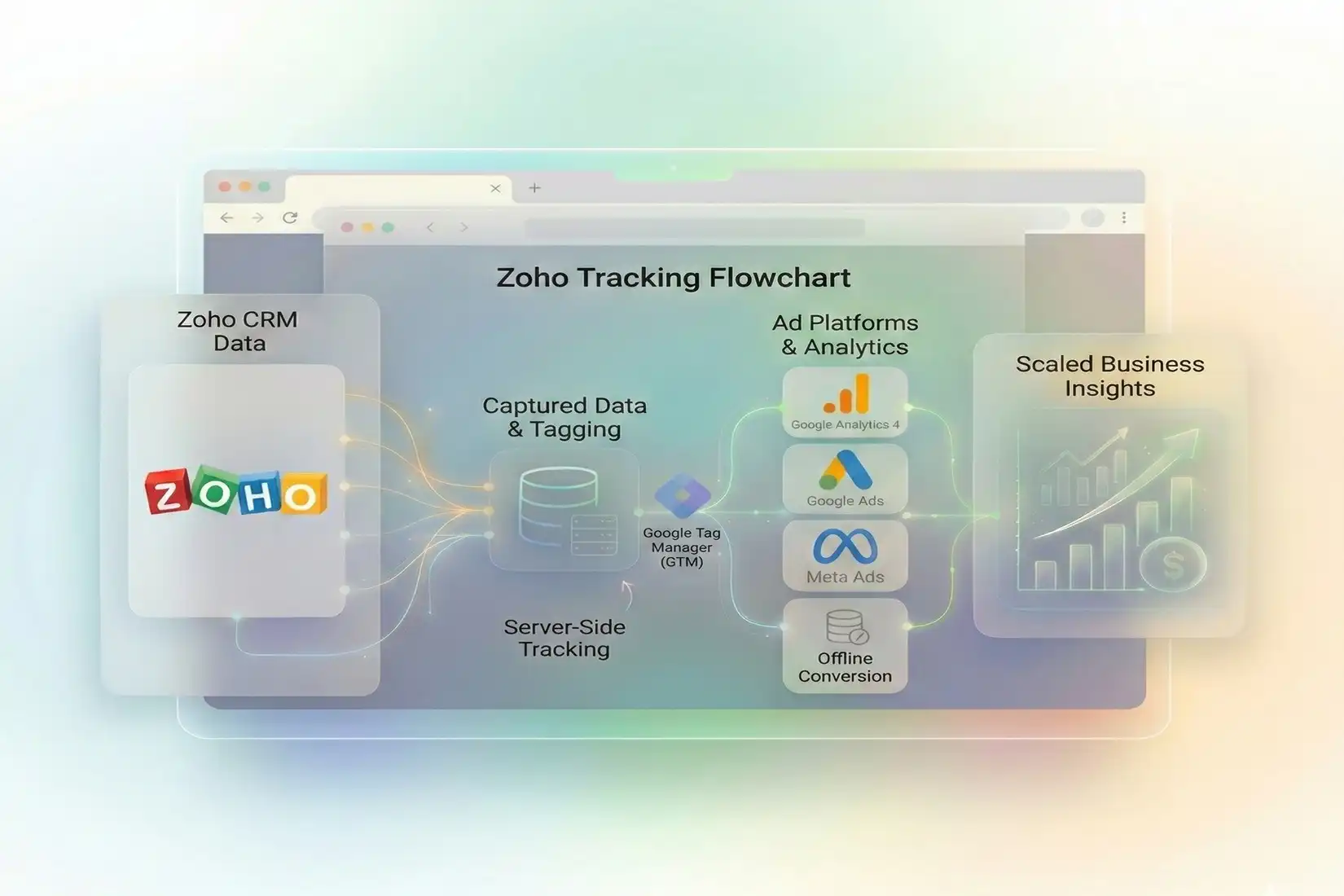
As a Conversion Tracking Specialist, I implement precise tracking for embedded Zoho forms, pop-ups, and CRM lead capture. I ensure every lead submitted on your website is captured in GA4, Google Ads, and Meta Ads (Pixel), including server-side and offline conversions. I also resolve common iframe tracking issues and close the gap between your marketing and sales data.
Standard pixels often fail with Zoho forms because they load in iframes. As a Web analytics specialist, I use custom GTM listeners to capture every submission, ensuring 100% attribution accuracy for your ads.
I don’t just track simple forms. I handle Zoho CRM webforms, Zoho Forms standalone links, and complex multi-step setups using Custom Code by GTM to ensure no data is lost during submission
I track Zoho CRM registration forms to capture event signups, webinars, and gated content conversions mean goal with accurate attribution conversion for Googel Ads, Meta Ads & GA4 used GTM.
 If you use custom apps built on Zoho Creator, I write specialized scripts to push data layer events to GTM upon successful record creation, ensuring custom workflows are measured.
For forms hosted on forms.zoho.com, I implement cross-domain tracking. This preserves the user session and attribution source when a visitor clicks from your landing page to the form.
 I use custom JavaScript listeners to detect form submissions within iframes on your site, ensuring the event fires correctly in analytics without relying on unstable “Thank You” page redirects.
I implement specific tracking for payment forms to capture “Purchase” events with dynamic revenue values, giving you clear visibility into your actual ROAS from day one.
Differentiate between a simple newsletter subscriber and a sales lead. I tag these events separately in GA4, keeping your conversion data clean and actionable for reporting.
Track appointments as primary conversions. I listen for the specific “Appointment Confirmed” signal to attribute high-value booked calls back to your Google Ads campaigns.
 I track dynamic pop-up forms that appear based on user behavior. I configure triggers to listen for the specific submission success event, ensuring these fleeting interactions are captured.
When Zoho forms are embedded on WordPress or other sites, they often load inside an “iframe” (a separate window). Standard Google Ads or Facebook pixels cannot “see” inside this window, leading to missed conversions. This means your ad platforms think your campaigns are failing even when they are generating leads. As a Conversion tracking specialist, I solve this using advanced Google Tag Manager listeners. Without this, you are optimizing blindly. Accurate tracking allows you to see exactly which keyword or ad generated the lead. Furthermore, by connecting Zoho CRM data back to your ads, you can optimize for “Won Deals,” ensuring your budget scales revenue, not just empty form fills.
I don’t just track forms, I unify your ecosystem. I connect HubSpot form activity with GA4 & Reporting tools to create a single source of truth.
I send custom parameters (like “Lead Status” or “Industry”) from your Zoho form to GA4, allowing you to segment audiences based on their actual inputs.
I set up Enhanced Conversions to match Zoho leads to ad clicks. This trains Google’s Smart Bidding to find more users who actually submit forms.
I sync “Closed Won” statuses from Zoho CRM back to Google Ads. This optimizes your campaigns for quality revenue, not just lead quantity, improving overall ROAS.
I clean up your tracking by centralizing all Zoho listeners in GTM. This prevents code conflicts, speeds up your site, and ensures a stable data collection environment.
For 100% accuracy, I set up Server-Side Tracking. This ensures conversion data reaches your ad platforms via API even if the user has an ad blocker installed.
I implement the Facebook Conversion API (CAPI). This sends lead data directly from the server, bypassing iOS blocking for better retargeting & attribution accuracy.
The primary benefit is data integrity. You stop guessing and start knowing. By implementing robust tracking, you gain visibility into the full customer journey. As a GTMÂ Conversion Tracking specialist, I help you pass “Lead Source” and GCLID data into Zoho CRM hidden fields. This enables “Offline Conversion Tracking,” allowing you to upload sales data back to Google Ads. You will eliminate duplicates, fix “Direct” traffic spikes in GA4, and ensure compliance via Google Consent Mode. Ultimately, this service lowers your CPA by feeding high-quality data to your ad algorithms, training them to find better customers.
Unsure if your numbers are real? As a Conversion tracking expert, I will review your Zoho setup. I check for iframe issues, duplicate pixels, and missing events to give you peace of mind.
Loved by 500+ Businesses worldwid
Read verified client reviews highlighting successful Google Ads, Meta CAPI, GTM, GA4, and server-side tracking implementations that improved ROI and conversion tracking accuracy.
Yes, this is the most common issue I fix. Zoho forms often use iframes, blocking standard tracking tags. I utilize a custom JavaScript “message listener” within Google Tag Manager. This script “listens” for the success signal sent by the Zoho iframe and triggers a conversion tag in Google Ads and GA4, ensuring no data is lost.
Absolutely. Whether you are using the dedicated Zoho Forms app or the native webforms generated from Zoho CRM, I can track both. I configure the setup to capture lead source details and pass them into hidden fields in your CRM, maintaining a clean line of attribution from ad click to lead creation.
Yes, tracking Zoho Bookings is essential for service businesses. I track “Appointment Confirmed” events separately from general lead forms. This distinction allows you to value booked calls higher than simple inquiries in your ad platforms, optimizing your budget toward users who are ready to speak with sales.
GCLID (Google Click ID) is vital for connecting online clicks to offline sales. I configure your Zoho forms to capture this ID in a hidden field. When a lead eventually closes a deal weeks later, we use this ID to send the conversion value back to Google Ads, telling Google exactly which ad brought in the revenue.
I highly recommend it. Browser-based tracking is becoming less reliable due to ad blockers and privacy updates like iOS 14.5+. Server-side tracking moves the data processing to a cloud server, ensuring that nearly 100% of your Zoho form submissions are recorded and sent to Facebook (CAPI) and Google Ads, regardless of browser restrictions.
Yes. High volumes of “Unassigned” or “Direct” traffic in GA4 often result from cross-domain tracking errors when a user interacts with an iframe or redirects to forms.zoho.com. By implementing proper Referral Exclusion lists and ensuring session continuity via GTM, I restore original source attribution, proving your traffic came from paid ads.
Yes, I build compliance into the tracking setup. Using Google Consent Mode v2, I ensure tags only fire based on user consent. For offline imports and server-side tracking, I hash sensitive customer data (like emails) using SHA-256 encryption before it is sent to any advertising platform, keeping you compliant with data privacy laws.
For a comprehensive Zoho tracking setup—including GTM configuration, iframe listeners, GA4 events, and Google Ads integration—it typically takes about 3 to 5 business days. This timeframe allows for a thorough audit, implementation of custom code, and a rigorous testing phase to ensure data accuracy before going live.
No, I handle the technical aspect. As a Web Analytics specialist, I write the custom scripts and configure the tags myself. You generally just need to provide access to your accounts (GTM, Zoho, Google Ads). I act as your technical partner, meaning you don’t need to hire an expensive developer to fix your marketing tracking.
Yes, this is the “Offline Conversion Tracking” component. I can set up automations (using tools like Zoho Flow or Zapier) that trigger when you move a deal to “Closed Won” in Zoho CRM. This automation sends the conversion value and GCLID back to Google Ads immediately, closing the loop and allowing for true ROAS calculation.